Heard the term “classic six” in Upper West Side listings and wondered what it really means? If you love prewar charm and larger rooms, this layout keeps popping up for good reason. You want clarity before you tour, from what rooms you actually get to what drives value and how to spot the right one for you. In this guide, you’ll learn how a classic six is defined, the features that set it apart on the UWS, why these homes command a premium, and what to evaluate during showings. Let’s dive in.
Classic six, defined
A classic six is a traditional Manhattan prewar layout with six principal rooms. You typically get a living room, a formal dining room, a kitchen, two full-size bedrooms, and a smaller third bedroom or maid’s room. Bathrooms are counted separately from the six-room total.
You’ll also see “classic seven,” which adds another full room to this configuration. Keep in mind that listing language is not fully standardized. Some agents count rooms differently or treat foyers and kitchens in their own way. Always review the specific floor plan and ask the listing agent to clarify the rooms and their dimensions.
Most classic sixes feature a formal entry foyer that opens to separate living and dining rooms, often with an adjacent kitchen or service corridor. Bedrooms usually sit away from the kitchen for privacy. The maid’s room is typically near the kitchen and can make a useful office, guest space, or flex room.
Prewar features you’ll see on the UWS
Architecture and age
On the Upper West Side, “prewar” usually refers to buildings constructed before World War II. You’ll find grand co-op apartment houses along Central Park West and Riverside Drive, elegant buildings on West End Avenue, and rows of townhouses and brownstones on side streets. Many of these properties are landmarked or architecturally significant and were built with sturdier materials and rich detailing.
Interior character
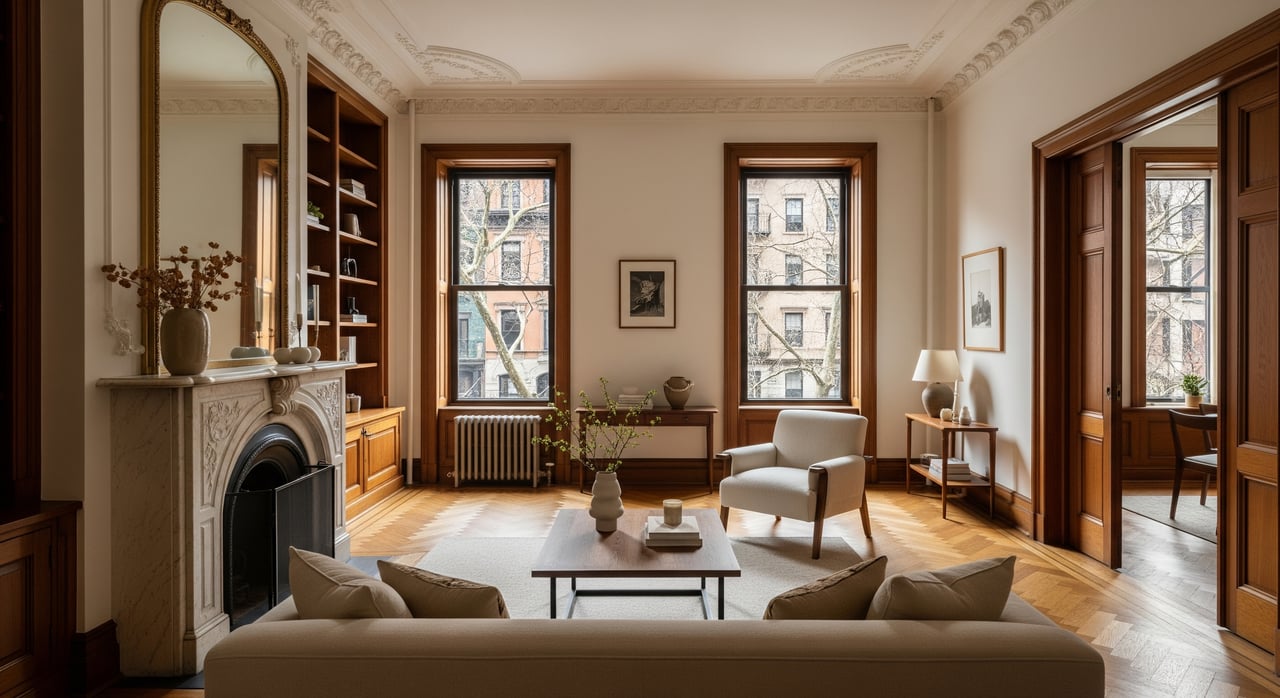
Prewar apartments are known for generous ceiling heights, often 9–10 feet or more, and tall windows that bring in abundant light. You may see plaster walls, crown moldings, picture rails, original woodwork, built-ins, and pocket doors. Hardwood floors are common, sometimes with wide planks in older units. These features add warmth and a sense of quality that many buyers seek out.
Building systems and realities
Most buildings of this era use radiator heat and may rely on window or mini-split air conditioning unless a building-wide system was added. Over time, plumbing and electrical systems are typically upgraded in stages. Load-bearing masonry walls and historic facades can limit structural changes, so any significant alteration will likely require permitting and building or co-op board approval. Kitchens and baths in original layouts tend to be smaller than what you’ll find in newer developments, and storage can be limited.
Why classic sixes command a premium on the UWS
Space that works for real life
The combination of a separate living room and formal dining room gives you true separation between entertaining and private life. That is tough to find in newer, open-plan buildings. The maid’s room adds flexibility, whether you need a home office, playroom, guest space, or oversized closet.
Ceiling height and daylight
Ceiling height matters. Nine, ten, and even twelve feet of vertical volume make rooms feel larger and brighter. Tall windows increase light, depth, and the sense of scale. Buyers on the UWS often pay more for that feeling of airiness.
Original detail and character
Crown moldings, woodwork, built-ins, and quality floors resonate with buyers who want heritage and craftsmanship. When period details are preserved or sensitively restored, they add both aesthetic appeal and perceived value.
Location and outlooks
Many classic sixes sit on premium corridors like Central Park West, Riverside Drive, West End Avenue, and Broadway. Proximity to parks, cultural institutions, and transit makes everyday life more convenient. Views of Central Park or the Hudson River, or simply strong light exposures, can elevate pricing.
Scarcity and building pedigree
Well-kept or renovated classic sixes are limited in number, especially in marquee co-op buildings with full services and strong reputations. That scarcity, combined with desirable addresses and attentive building staff, supports premium values.
What to evaluate on a tour
Light and exposure
Identify the primary exposures and how they perform throughout the day. West-facing units often enjoy afternoon light and sunsets toward the Hudson. South-facing rooms can feel bright during midday. Consider obstructions, street width, and tree canopies, which can affect light quality seasonally. When possible, aim to see the apartment at more than one time of day.
Ceiling height and volume
Confirm actual ceiling heights and look for any dropped ceilings or soffits that reduce volume. Note window height and head clearances. Taller windows change the perception of space and can dramatically improve the feel of a room.
Condition and renovation history
Ask for a written renovation history and whether permits and building approvals were obtained. Look for signs of water intrusion or staining around windows and ceilings, uneven floors, and cracked plaster. Test windows for ease of operation and drafts. Ask about building riser replacements and the status of the electrical panel within the apartment.
Layout and functionality
Bring room measurements and verify that the dining room and living room can serve their intended functions. Think about whether the kitchen can be expanded or reconfigured within building rules. Assess whether the maid’s room is practical for your needs and complies with any requirements for use as a bedroom.
Building and financials
On the Upper West Side, many classic sixes are in co-op buildings. Co-ops often require larger down payments, a thorough financial review, and board approval for renovations. Subletting policies and pet rules vary. Monthly carrying costs may reflect full-time staff, historic maintenance, and capital projects. Ask about reserve funds, current or pending assessments, and planned building work such as facade repairs or boiler replacements.
Renovation realities
Kitchens and baths are usually the most expensive updates. In co-ops, structural walls and plumbing stacks limit how much you can move fixtures. Historic and landmarked properties may require additional approvals and longer timelines. Plan for contingencies and confirm your renovation path with the building before you commit to major design changes.
Quick showing checklist
- Check light at multiple times of day, if possible.
- Measure ceiling heights and key room dimensions.
- Bring a small flashlight to inspect closets, behind radiators, and inside cabinetry.
- Ask for the last two building financial statements and any recent capital project lists.
- Review the offering plan (condo) or co-op house rules and alteration agreements.
- Clarify board policies on subletting, pets, and renovations.
Upper West Side context
The Upper West Side stretches roughly from 59th to 110th Street, bounded by Central Park West and the Hudson River with Broadway as a central spine. You will find a high concentration of prewar co-ops, many with doormen and on-site staff. Along Central Park West, buildings often feature larger floor plates and prime park views. Riverside Drive and West End Avenue offer elegant architecture and, in some cases, river outlooks. Side streets in the 70s through 90s include many brownstones and townhouse conversions.
Co-ops remain the dominant ownership structure for larger prewar apartments in the area. That can influence financing and timelines. Down payment requirements can be higher, and boards will review your financial profile and renovation plans carefully. While condos and townhouses offer more flexibility, the supply of true classic six-style condos is limited, so most shoppers focus on co-op inventory.
Is a classic six right for you?
If you value defined rooms, tall ceilings, rich architectural detail, and the flexibility to adapt spaces to your lifestyle, a classic six can be an excellent fit. You trade off against smaller original kitchens, sometimes fewer bathrooms, and building rules that shape what you can change. The payoff is a home with presence, privacy, and a layout that supports entertaining and quiet time equally well.
When you are ready to see what this looks like in person, we can help you target the right buildings, exposures, and floor plans, then guide you through board policies and renovations so you move forward with confidence.
Ready to explore classic six opportunities on the Upper West Side? Connect with the team at Aloha Luxury Estates for curated tours, market perspective, and hospitality-forward guidance from offer to closing.
FAQs
What does “classic six” mean in Manhattan co-ops?
- A classic six typically includes a living room, formal dining room, kitchen, two full-size bedrooms, and a smaller maid’s room, with bathrooms counted separately.
How is a classic six different from a three-bedroom?
- Many classic sixes have two full bedrooms plus a smaller maid’s room; depending on size and egress, the maid’s room may or may not function as a legal third bedroom.
Can I open up a classic six to create a great room?
- Sometimes, but structural walls, plumbing stacks, and co-op rules can limit how much you can remove; expect permits, board approval, and higher renovation costs.
Do most classic sixes have two bathrooms on the UWS?
- Many original layouts have one full bath and a smaller service bathroom; renovated apartments often add or reconfigure baths when the building allows it.
Why do ceiling heights matter for value in prewar homes?
- Higher ceilings and tall windows increase light and perceived space, which buyers prize; apartments with 9–12+ foot ceilings often command a premium.
Are classic six co-ops harder to buy or resell?
- Financing is similar, but co-op board approval can add steps; resale tends to be strong when the apartment has good light, preserved details, and a desirable location.