Picture this: sunlit walls, soaring ceilings, and the quiet rhythm of cast-iron columns framing your living room. If you are drawn to SoHo’s gallery-scale lofts, you probably also know there is more to them than pretty windows. From legal status to landmark rules, small details can make or break your purchase and renovation plan. In this guide, you will learn how to evaluate a cast-iron loft with confidence, avoid common pitfalls, and set up a clear due-diligence path. Let’s dive in.
What counts as a SoHo cast-iron loft
SoHo’s most coveted lofts sit in the SoHo–Cast Iron Historic District, a protected area that maps the highest concentration of 19th-century cast-iron-front commercial buildings. These structures were built as warehouses and factories, then later converted to retail and residential lofts. If you want the authentic look and feel, start your search inside this district and on its extension blocks. You can review the district’s history and boundaries in the official SoHo–Cast Iron Historic District designation report.
Why cast iron matters: after the Civil War, fabricators produced modular iron façades that delivered generous window openings, repeating bays, and mid-rise massing. That template is still what you love about SoHo today, from the oversized windows to the open, flexible floor plates.
Key features to evaluate in a loft
Ceiling height and volume
Vertical volume is a defining feature. Finished clear heights in authentic SoHo lofts often land in the 12 to 16 foot range, with many listings citing 12 to 14 feet. This scale shapes how your eye travels, how you display art, and how you condition the space. Always verify the finished clear height on site, not just the floor-to-floor dimension. For context on typical heights promoted in the neighborhood, see this overview of authentic loft living in SoHo.
Windows, daylight, and orientation
Tall, wide windows are a signature of cast-iron buildings. Many are original steel or wood sash, which can deliver incredible daylight but weaker thermal and acoustic performance compared to modern insulated units. Check whether windows are original or historically sensitive replacements, if there are interior storms, and whether any changes were approved under landmarks rules. Orientation matters too. South and west exposures can bring stronger sun and heat loads, while north light stays even for artwork.
Columns, bays, and layout flexibility
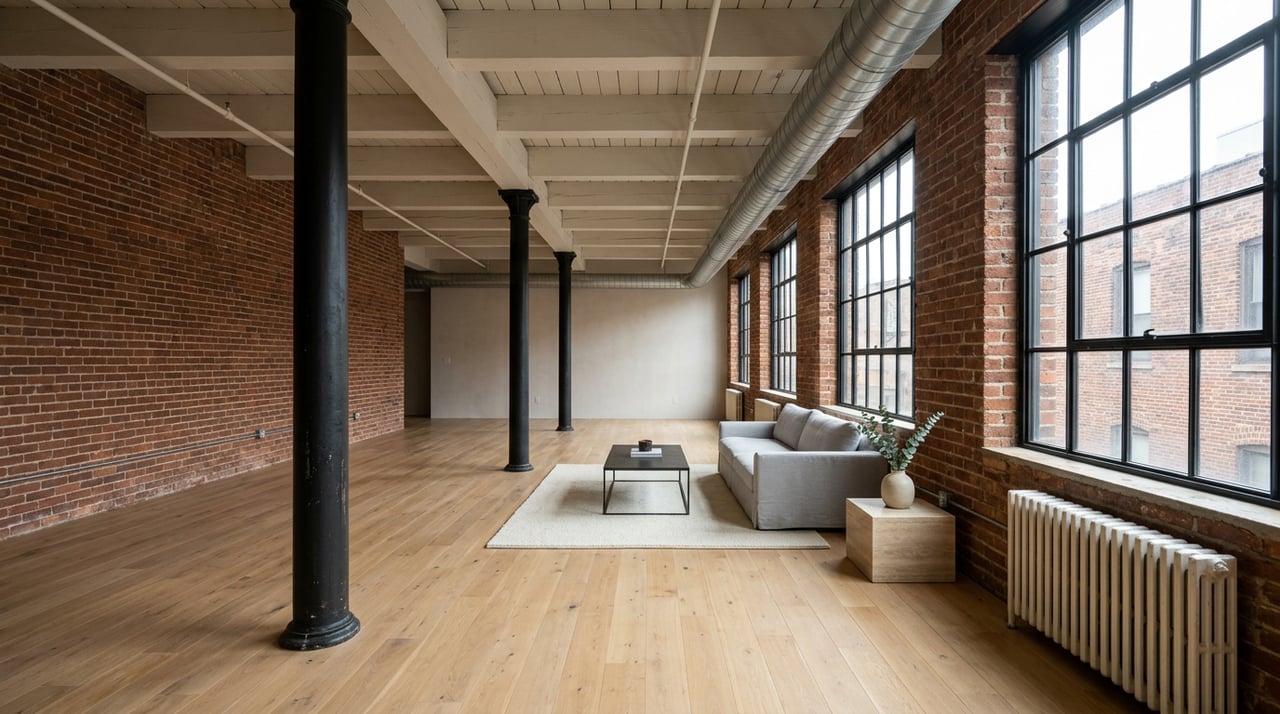
These buildings use column-and-beam construction that creates open bays. Expect regular columns that will influence furniture layouts, kitchen placement, and potential bedroom partitions. As a rule of thumb, historic industrial grids often span into the mid-teens to a few-dozen feet, which helps explain the open feel. If layout is critical to you, confirm bay spacing on a plan or with a tape. You can find general context on historic industrial grids in this technical reference on high-rise structure history hosted on Scribd.
Floors, loads, and vibrations
Many original floors use heavy timber joists and plank construction. They can be slightly out of level and may not love concentrated loads. If you plan a heavy kitchen island, safe, or a mezzanine, bring in a structural engineer early. Legal conversions typically require a registered design professional and an Alteration Type 1 filing with the Department of Buildings (DOB). Review the DOB’s Project Guidelines for loft legalization to understand the scope and standards.
Mechanical systems and HVAC
Original systems often include steam heat and limited ductwork, with cooling added later. Tall volumes and landmarked façades make central air retrofits tricky. Many owners opt for ductless mini-splits, cassettes, or VRF systems to preserve ceiling height and reduce invasive duct runs. Plan condenser locations and penetrations early to respect building rules and landmarks visibility requirements. For practical context on SoHo HVAC constraints and solutions, see this overview from a local contractor on HVAC options in SoHo lofts.
Rules that shape your plans
Landmarks oversight in the district
If the façade is within the SoHo–Cast Iron Historic District, exterior work visible from the street requires Landmarks Preservation Commission (LPC) review. That includes storefront changes, windows, cornices, and rooftop bulkheads if visible. LPC can approve minor work with a Certificate of No Effect, while more visible or substantive alterations may need a Certificate of Appropriateness. Window replacements usually must match original sash patterns and profiles within tight tolerances. Read the applicable requirements in the LPC rules summary.
Practical tip: do not assume you can swap windows for off-the-shelf insulated units. Building-wide window master plans are common, and individual replacements may not be allowed unless they align with an approved plan.
Loft Law status and legalization
Many SoHo buildings were converted to residential use in the 1960s to 1980s, often before full code compliance. New York’s Loft Law (Article 7-C) created the Interim Multiple Dwelling (IMD) category and a path to legalize these buildings under Loft Board oversight. You need to know whether the building is already legalized with a residential Certificate of Occupancy, registered as an IMD on a path to legalization, or not compliant. Start with the NYC Loft Board’s official Loft Law overview and resources.
DOB permits and code work
Substantive renovations typically require DOB permits. For IMD buildings, legalization can involve sprinklers, fire separations, egress upgrades, and electrical and plumbing work. These steps add time and cost, so build permitting and examination windows into your schedule. The DOB’s Project Guidelines for lofts outline the process and standards.
FISP (Local Law 11) obligations
If the building is taller than six stories, it must file a façade inspection report with the Department of Buildings every five years under the Façade Inspection & Safety Program. Results are classified as Safe, Safe With a Repair and Maintenance Program, or Unsafe. An Unsafe status triggers immediate protection like a sidewalk shed and required repairs. Ask for the most recent filing and any open repair mandates on the DOB’s FISP guidance.
Common surprises and costs
Cast-iron façade care
Cast-iron cornices, columns, and storefronts need periodic maintenance. The National Park Service recommends in-kind repair wherever feasible, careful metal conservation, and exacting reproduction when necessary. That level of precision can be costly, so factor in cyclical paint and metalwork. For best practices on historic cast iron, review the NPS’s technical preservation resources.
Windows and glazing
Window replacement is a frequent stumbling block. LPC often requires matching historic profiles, muntin patterns, and sightlines, with limited allowances for substitute materials. Insulated glazing and simulated divided lights may be possible when executed carefully and often as part of a building-wide plan. Expect longer lead times and higher unit costs than a typical replacement window.
Mechanical upgrades
Adding central air in a tall, landmarked loft takes planning and diplomacy. VRF and mini-split systems reduce the need for soffits and dropped ceilings, but you still need to resolve condenser placement and penetrations per LPC and DOB rules. Coordinate early with building management to avoid redesigns.
Storage and acoustics
Open plans look incredible but hide fewer closets. Plan for custom millwork and discreet partitions to carve out bedrooms and storage without losing the loft’s scale. If you are enclosing sleeping areas, add an acoustic strategy so the space feels serene.
Step-by-step due diligence
Use this checklist to shorten surprises and sharpen negotiations.
- Confirm legal status. Ask for Loft Board registration, any Loft Board orders, and the current Certificate of Occupancy. Use the Loft Board’s official guidance as your framework.
- Pull DOB history and violations. Review BIS job filings, Alt-1 records, and any open DOB or ECB violations. This public-facing guide can help you navigate searches for NYC violations and records.
- Check LPC approvals. Request prior Certificates of Appropriateness or No Effect for windows, storefronts, and rooftop work, plus any open enforcement. The LPC rules summary outlines approval types and thresholds.
- Verify FISP filings. If the building is 6+ stories, get the latest façade report status and any required repairs from the FISP program page.
- Analyze structure and systems. If you plan a mezzanine, heavy appliances, or an HVAC overhaul, obtain recent structural and MEP reports. Cross-check feasibility against the DOB’s loft project guidelines.
- Inspect the loft’s fundamentals. Measure clear ceiling height, note window type and condition, map column spacing, and evaluate orientations. For general expectations on SoHo loft proportions, see this summary of authentic SoHo loft features.
- Budget for historic-grade work. Allocate funds and time for in-kind façade treatment and historically appropriate windows, guided by the NPS preservation standards.
Loft charm vs new development
You are often choosing between character and turnkey systems. Historic SoHo lofts deliver volume, original fabric, and one-of-a-kind texture, but usually pair with older infrastructure and stricter approvals. New developments nearby offer modern HVAC, insulation, amenities, and warranties, often with lower ceilings and a contemporary aesthetic. If you love history and scale, verify mechanical comfort and long-term façade obligations. If you want amenities and simplicity, compare the tradeoffs in daylight quality, window proportions, and interior volume. For a sense of how HVAC strategies differ in the neighborhood’s buildings, this practical overview of SoHo loft HVAC explains common solutions.
Buying strategy and timeline
- Start with status. Confirm Loft Law, C of O, and FISP items before you fall in love with finishes. These factors shape value and timing.
- Align your scope. If you plan a major renovation, build LPC and DOB windows into your schedule. Design, approvals, and fabrication for historic-grade windows or façade work can run longer than a standard project.
- Measure what matters. Bring a tape and a camera. Record clear heights, column locations, window conditions, and any visible façade issues. These checks inform engineering advice and pricing.
- Get the right team. Engage an architect and engineer who understand landmarked lofts. They will map a code-compliant path that respects the building’s character and avoids rework.
Let’s find your SoHo loft
When you choose a cast-iron loft, you are buying architecture and a piece of New York’s commercial history. With the right plan and team, you can protect that character and enjoy modern comfort. If you want a trusted partner to help you source options, pressure-test due diligence, and shape a renovation strategy that works for both LPC and DOB, we are here for you. Reach out to Aloha Luxury Estates to start your SoHo search with confidence.
FAQs
What is the SoHo–Cast Iron Historic District?
- It is a protected area mapping the core 19th-century cast-iron-front buildings in SoHo; exterior changes visible from the street typically require LPC review per the district designation report and LPC rules.
How do I verify that a SoHo loft is legal for residential use?
- Ask for Loft Board registration, any Loft Board orders, and the current Certificate of Occupancy; use the NYC Loft Board’s official resource page as your starting point.
Why are window replacements in cast-iron lofts so complex?
- LPC often requires matching historic profiles, sightlines, and patterns; insulated or simulated divided-light solutions may be allowed only when executed carefully, often as part of a uniform plan under the LPC rules.
What is FISP and why does it matter for my building?
- The Façade Inspection & Safety Program requires hands-on façade inspections every five years for buildings taller than six stories, with corrective work if classified Unsafe; review the DOB’s FISP guidance.
Which HVAC systems work best in tall SoHo lofts?
- Many owners choose ductless mini-splits, cassettes, or VRF to minimize soffits and respect landmarks constraints; see practical context in this SoHo HVAC overview.